| |
|
|
| |
|
|
|
Collaborative Changeworks
1. LEADERSHIP FOR COLLECTIVE LEARNING AND ACTION |
|
This is an intensive programme designed to enable individuals and teams to work in the complex and unpredictable environments of our organizations in a manner which promotes learning and creativity, and which draws on collective intelligence. This course grew out of pioneering work done at MIT’s Organizational Learning Center. It offers tools and practices in organizational learning and leadership, and provides opportunities for participants from different organizations and across sectors to explore issues and dilemmas they are currently facing. Dialogue, learning conversations and rigorous reflection will be the primary mode of practice for exploring and learning together. The course is highly participative and interactive employing individual, paired and small group work. |
| |
COURSE CONTENT:
Effective Conversation and Thinking Skills
The practice of dialogue or skillful conversation is a means by which individuals, teams and organizations can think, learn and create together. Participants practice skills and tools that enable them to engage in meetings and conversations in a manner that promotes learning, more inclusive decision-making and informed action.
A Structural Approach to Interpersonal Dynamics
Participants are introduced to the Boundary Profile, which was created by David Kantor, a family and organizational systems analyst and practitioner. This simple approach offers a way of identifying and appreciating differences in order to function effectively and intervene intelligently in important relationships and team conversations.
Leadership and Personal Mastery
Using four leadership archetypes participants examine their leadership strengths, areas needing development and shadows and learn principles for living from a generative and emergent orientation rather than the usual reactive stance.
System Intervention
Developing the capacity to intervene wisely in a system is a critical discipline for leaders who are interested in bringing change in their organizations. Participants learn two approaches for analyzing a system from different levels of perspective and identifying where to intervene.
Who should participate?
Organization leaders, working teams, line managers, internal OD and HR professionals, and individuals interested in learning and leadership. We deliberately encourage a cross-level, cross-functional, cross-organizational and cross-sectoral learning community. We highly recommend that you attend with a thinking partner from your organization or as a team. We have found that implementing this work in organizations is much easier and more effective when people are able to support each other in using these skills. It is even more powerful when an OD/HR person attends with a line manager with whom s/he is working or would like to work in a change effort.
The programme is limited to a maximum of 24 participants. It is tailored to suit the expertise, experience and needs of the group. |
|
 |
| |
2. INTRODUCTION TO MODEL BUILDING
This is an intensive course intended to be a first step in the journey of creating your own model of practice, whether in coaching, managing, consulting, teaching, or conducting change initiatives. It is specifically designed to assist participants in becoming aware of the tacit assumptions, ideas, unexamined practices and values that inform how they think, act and bring about change in their work.
This course will offer participants the opportunity to:
- Understand the 4 components of model building
- the theory of the “thing” (what it is being focused on in their work)
- the theory of change
- the theory of practice
- underlying assumptions
- Learn about their own approaches by examining the tacit models of
practitioners in various fields
- Gain understanding in how their life stories/profiles influence their practice
- Begin to articulate their own model
|
|
|
| |
3. DIALOGUE FACILITATION INTENSIVE
This is an intensive programme which will build on the skills and practices covered in the LCLA 1. It is specifically designed to expand participants’ skill and capability in the practice and facilitation of dialogue. It will deepen their understanding of the philosophy and principles of dialogue and its role in enabling deep change in individuals and organizations.
This course will offer participants the opportunity to:
- Expand their skills of observation and reflection
- Learn to identify the phases of dialogue and the moves appropriate for facilitating in each phase
- Become more aware of their individual boundary profiles and how these influence their facilitation and impact the groups they work with
- Learn and practice facilitation moves which help deal with breakdowns and “stuck” structural dynamics in groups
- Sense, name and influence the quality of the conversational container
|
|
|
| |
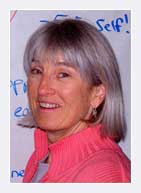 Beth Jandernoa Beth Jandernoa
Beth Jandernoa is an organizational learning consultant who divides her time between the U.S. and South Africa. The scope of her work includes leadership development, dialogue, large-scale participative change interventions and mentoring programs for emerging women leaders.
She has served on the faculty at the Society for Organizational Learning teaching the Core Competencies course with Peter Senge and the Presencing: Leading for Profound Innovation and Change course with Otto Scharmer, for Columbia University and the University of Michigan’s Advanced Program in Organization Development and Human Resource Management, for the 10-month Leadership for Collective Intelligence Course offered by Dialogos, and for the U.S. Government Graduate School Leadership Academy.
She is a founding partner of The Ashland Institute and Collaborative ChangeWorks. |
|
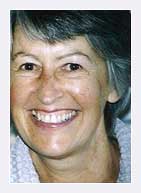 Glennifer Gillespie Glennifer Gillespie
Glennifer Gillespie specializes in organizational learning, the practice of productive conversation and dialogue in organizations and communities, coaching, and women’s leadership.
She divides her time between South Africa and the United States, spending about three months of each year in South Africa. She is currently a Senior Associate at DiaLogos, a consulting company in Boston where she consults, coaches and serves on the faculty of their 10-month Leadership for Collective Intelligence program for global leaders. A founding partner of The Ashland Institute, which is a non-profit dedicated to promoting dialogue in communities and organizations, and to the practice of inner leadership |
|
|
|
|
| |
|
| |
|
|